Email us: sales@valvesonlycanada.com

Butterfly Valve Manufacturer in Canada
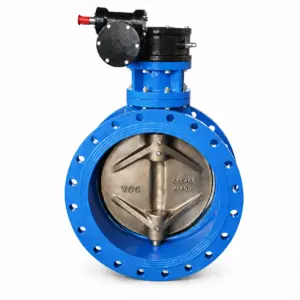
Butterfly valves are widely used for reliable flow control and pipeline isolation in industrial systems. ValvesOnly Canada, the largest Butterfly Valve Manufacturer in Canada, manufactures high-performance industrial butterfly valves serving customers across Toronto, Calgary, Edmonton, Vancouver, Montreal, and throughout Canada.
What Is a Butterfly Valve?
Butterfly valves are quarter-turn valves that can be used for controlling, isolating, or regulating the flow of fluids in pipelines. The mechanism in which a butterfly valve works involves rotation of the valve disc around its central shaft by 90 degrees so as to either let in the fluid or prevent it from flowing. As opposed to many other types of valves, the disc always stays inside the pipe irrespective of whether the valve is closed or opened, hence resulting in compactness and lightweight construction of the butterfly valve.
How Does a Butterfly Valve Operate?
Turning of the shaft causes the disc to turn within the valve housing. If the disc is in alignment with the flow, then the pipe is fully open. When the disc rotates through 90 degrees, it forms a seal to the flow since it will be perpendicular to the flow.
What Types of Butterfly Valves Does ValvesOnly Canada Manufacture?
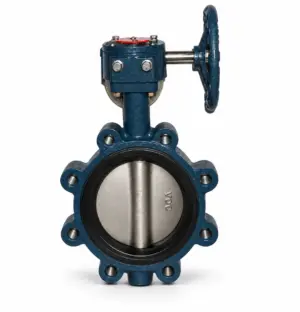
- Lug Type Butterfly Valve – Constructed with threads on the lugs around the valve body, which enables its installation at the ends of the pipelines without disassembling the whole piping system.
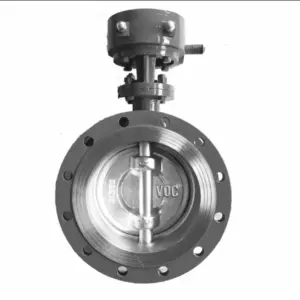
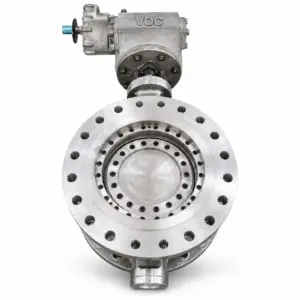
- Triple Offset Butterfly Valve – A metal-seated butterfly valve designed to provide a bubble-tight shut-off in cases when high pressure and high temperature require the use of metal-seated valves.
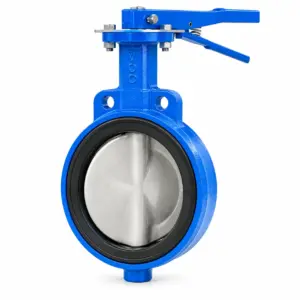
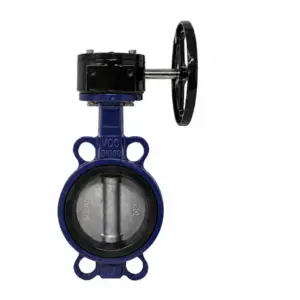
- Wafer Type Butterfly Valve – A small and lightweight butterfly valve, mounted between two pipe flanges, suitable for those areas where space for installation is limited.
Material Options:
| Category | Material / Grade | Standard | Common Use |
| Carbon Steel | WCB, LCB, LCC | ASTM A216, A352 | General industrial and pipeline service |
| Stainless Steel | F304, F316, F316L | ASTM A351, A182 | Corrosive and chemical applications |
| Duplex Steel | F51 (2205) | ASTM A890 | Offshore and seawater systems |
| Super Duplex | F53, F55, 2507 | ASTM A890 | High chloride environments |
| Aluminium Bronze | C95400, C95800 | ASTM B148 | Marine and brackish water service |
| Bronze | C83600, LG2 | ASTM B62 | Water distribution systems |
| Alloy Steel | F11, F22 | ASTM A217 | High-temperature applications |
International Standards for Butterfly Valves:
Our butterfly valves are designed to API 609, ASME B16.34, MSS SP-67, and MSS SP-68. Testing follows API 598 and ISO 5208, covering pressure testing, seat leakage testing, and functional checks of disc operation to confirm smooth, reliable performance.
Why Engineers Choose This Butterfly Valve Design:
- Small-sized design that minimizes space required for mounting and installation costs
- Reduced weight as opposed to gate valves and globe valves
- Low torque requirement for efficient valve operation
- Useful in flow isolation and also in flow throttling
- The triple offset butterfly valves provide bubble tight shut-off in critical applications
- Compatibility with automated control systems
Industries That Use Butterfly Valves:
ValvesOnly Canada butterfly valves are trusted across:
- Water treatment and distribution
- Power generation
- Oil and gas processing
- Petrochemical plants
- Marine and offshore systems
- Mining
Choosing the Right Butterfly Valve:
The right butterfly valve selection depends on the pressure rating, temperature range of operation, sealing specifications, and restrictions of installation. ValvesOnly Canada helps their customers select the proper valve configuration and material grade for the butterfly valves.