Email us: sales@valvesonlycanada.com

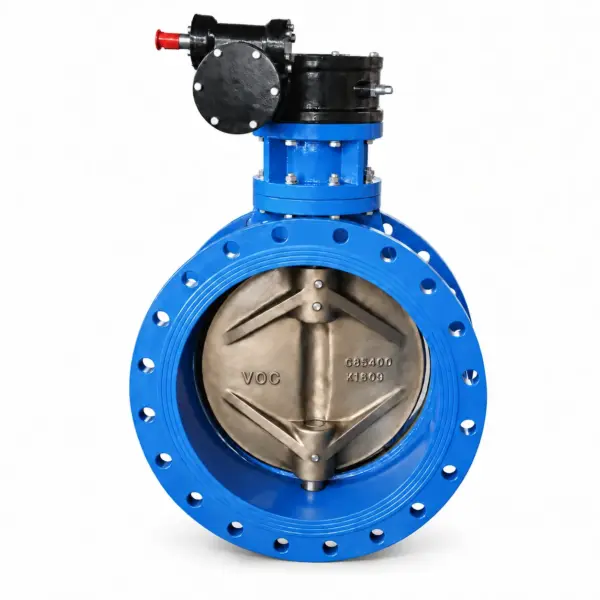
Double Offset Butterfly Valve
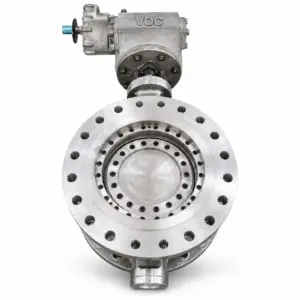
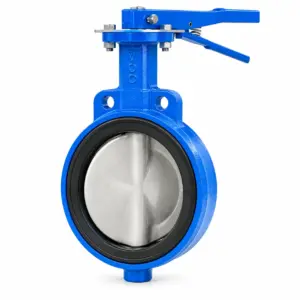
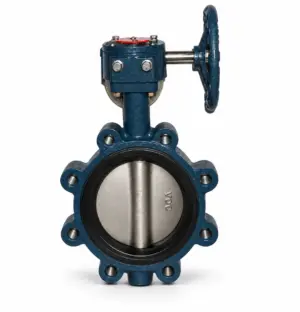
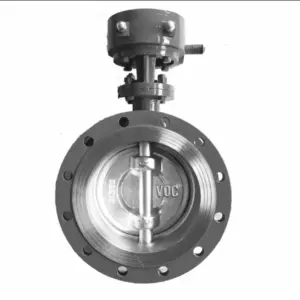
Double Offset Butterfly Valve Manufacturer in Canada offering Class 150–600 valves with wafer, lug or flanged ends for reliable isolation in water systems.
In pipelines that need frequent isolation, repeated contact between the disc and seat can increase wear. A double-offset butterfly valve reduces this contact by positioning the shaft away from both the seat plane and the centreline of the valve body. The disc lifts away from the seat as opening begins, reducing rubbing through most of its travel.
Valves Only Canada is a Double Offset Butterfly Valve Manufacturer in Canada, supplying compact isolation valves for water, oil and gas, chemical processing and industrial utilities. Body materials, sealing arrangements and operators are selected to suit the fluid, pressure and operating conditions.
Features
- Double-offset geometry reduces disc-to-seat rubbing
- Quarter-turn operation for straightforward opening and closing
- Reduced seat wear during repeated operation
- Compact installation in large-diameter piping
- Soft-seated and metal-seated options
- Anti-blowout stem construction
- Manual or automated operation
Technical Specifications
|
Parameter |
Specification |
| Valve Type | Double Offset Butterfly Valve |
| Design | Double eccentric disc and shaft arrangement |
| Nominal Size | DN50 to DN1500 |
| Pressure Rating | ASME Class 150, 300 and 600 |
| Carbon Steel Body | ASTM A216 WCB |
| Stainless Steel Body | ASTM A351 CF8 / CF8M / CF3M |
| Duplex Body | ASTM A995 Grade 4A |
| Super Duplex Body | ASTM A995 Grade 5A / 6A |
| Sealing Arrangement | Soft seat or metal seat |
| Flow Direction | Preferred-direction sealing; bidirectional versions available |
| End Connections | Wafer, Lug or Double Flanged |
| Stem Design | Anti-blowout |
| Actuation | Lever, Gear, Pneumatic or Electric |
| Actuator Mounting | ISO 5211 mounting interface |
Standards and Testing
API 609 covers applicable butterfly valve construction and dimensional requirements. ASME B16.34 may be specified for pressure-temperature ratings, with ASME B16.5 or ASME B16.47 governing the relevant mating flanges.
Inspection and shell and seat pressure tests may follow API 598. Fire-safe versions require qualification to the applicable API 607 or API 6FA test standard; this capability should be specified separately.
Industries Served in Canada
|
|