Email us: sales@valvesonlycanada.com

Cryogenic Valve Manufacturer in Canada
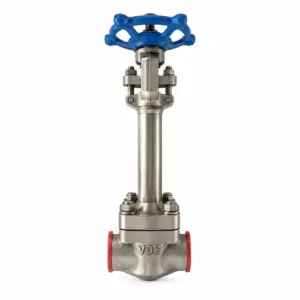
Designed for low-temperature applications, cryogenic valves provide reliable shut-off and safe flow control in systems handling liquefied gases. Built to perform under extreme cold, they maintain sealing integrity and operational reliability. As a leading Cryogenic Valve Manufacturer in Canada, ValvesOnly Canada supplies industries across Toronto, Calgary, Edmonton, Vancouver, Montreal, and throughout Canada.
What Is the Purpose of a Cryogenic Valve?
Consider a cryogenic valve to be simply a valve that has been redesigned to work under circumstances where a conventional valve wouldn’t have worked. At temperatures below -100 degrees Celsius, the metal would contract, the seals would contract, and the stem would seize completely. A cryogenic valve has been designed taking into consideration these very weaknesses and will keep on functioning well even when subjected to many freeze/thaw cycles.
Construction and Working:
Depending on the application, we manufacture three primary configurations:
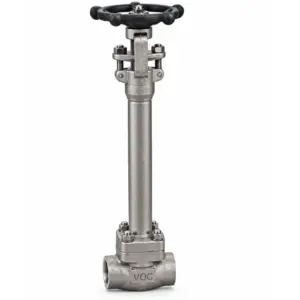
- Cryogenic Gate Valve – a multi-turn, full-bore design suited for complete isolation in low-temperature lines.
- Cryogenic Globe Valve – built for precise, linear-motion flow control where regulation is as important as shut-off.
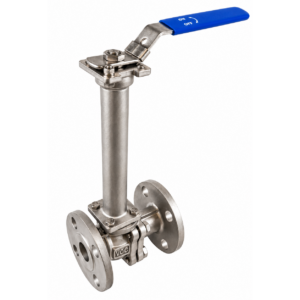
- Cryogenic Ball Valve – offers quarter-turn operation with low torque, delivering tight shut-off for pipeline isolation.
Materials and Grades:
The right material comes down to the pressure involved, the temperature range, and what media the valve will handle:
| Category | Material / Grade | Standard | Common Use |
| Stainless Steel | F304, F304L, F316, F316L | ASTM A351, A182 | LNG and industrial gas systems |
| Low Temp Carbon Steel | LCB, LCC | ASTM A352 | Low-temperature pipelines |
| Duplex Steel | F51 (2205) | ASTM A890 | Corrosive cold environments |
| Super Duplex | F53, F55, 2507 | ASTM A890 | High chloride, low-temp conditions |
| Alloy 20 | CN7M | ASTM A351 | Acidic cryogenic applications |
| Hastelloy | C276, B3 | ASTM B564 | Aggressive chemical service |
| Inconel | 625, 718 | ASTM B564 | High-pressure cryogenic systems |
| Incoloy | 800, 825 | ASTM B564 | Thermal cycling environments |
| Aluminium Bronze | C95400, C95800 | ASTM B148 | Marine and cold utility systems |
Cryogenic Valve Standards:
Every valve we manufacture is designed and tested against recognized benchmarks, including API 6D, ASME B16.34, ISO 28921, API 608, and BS 6364. We supply valves across a range of PN ratings and ASME pressure classes, with end connections and DN sizing configured to fit your piping setup. Prior to dispatch, each unit passes through cryogenic temperature testing, hydrostatic pressure testing, functional checks across repeated thermal cycles, and seat leakage verification under cold conditions.
What Sets Our Valves Apart:
- Blow-out proof stems
- Stem sealing protection by extended bonnet design
- Materials selected to avoid thermal contraction problems
- Performance guaranteed throughout many thermal cycles
- Low emission seals
- Can be manual or automated
Where They are Used?
ValvesOnly Canada cryogenic valves keep essential systems running across:
- Industrial gas processing plants
- LNG storage and transfer systems
- Bulk liquid gas handling
- Cryogenic pipeline networks
- Energy and process facilities managing liquefied gases
Get the Right Valve for Your System:
An appropriate cryogenic valve helps maintain optimum functionality even at very low temperatures through configuration that is suitable for your process. Every detail, from bonnet design to material grade, should match the true low-temperature nature of your process.
It may be that you require a compact ball valve, a full bore gate valve or even a globe valve for flow control; what will determine that is the shut-off requirements, the medium, pressure and temperature range.
Backed by engineering services and reliable delivery throughout Canada, ValvesOnly Canada provides cryogenic valves for harsh low-temperature applications.