Email us: sales@valvesonlycanada.com

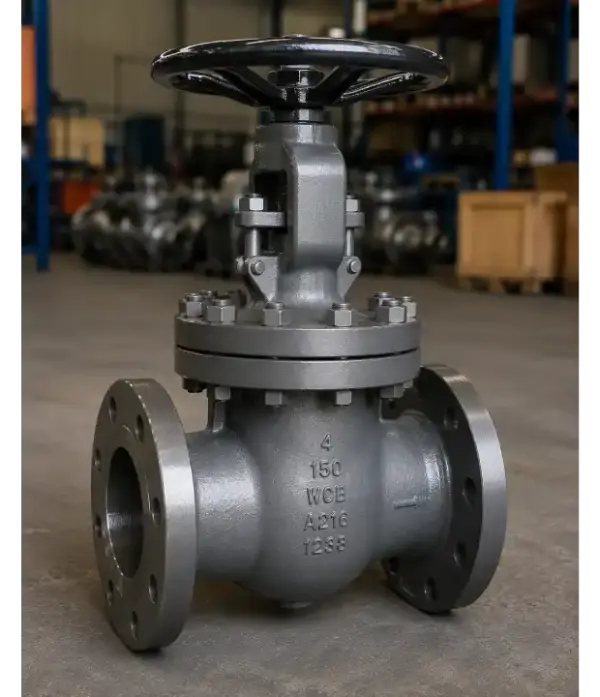
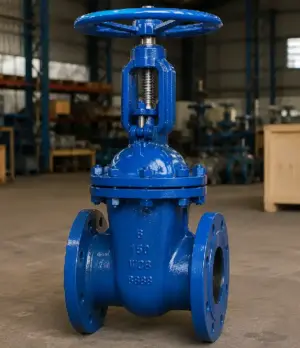
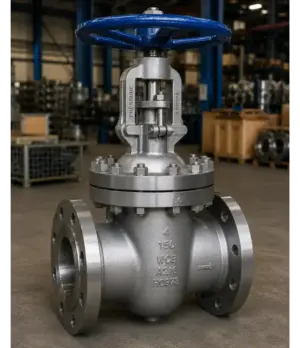
Non Rising Stem Gate Valve
Non Rising Stem Gate Valve Manufacturer in Canada
Non Rising Stem Gate Valve Product Overview:
- Nominal Size: 2″ to 48″
- Pressure Class: Class 150 to Class 2500
- Temperature Range: -29°C to +650°C
- Design Standards: API 600, ASME B16.34, BS 1414
- Face to Face: ASME B16.10
- Inspection and Testing: API 598, ISO 5208
- Construction Type: Non Rising Stem, Inside Screw Design, Flexible Wedge, Bolted Bonnet, Pressure Seal Bonnet
Non Rising Stem Gate Valve Design Features:
Main Pressure Components:
- ASTM A216 WCB
- ASTM A352 LCB / LCC
- ASTM A351 CF8 / CF8M / CF3M
- ASTM A995 Grade 4A
- ASTM A995 Grade 5A
- ASTM A995 Grade 6A
- ASTM A351 CN7M
- ASTM B148 C95800
Gate Operating Components:
- Gate: Flexible Wedge / Solid Wedge
- Stem: ASTM A182 F304 / F316 / F316L
- Stem Nut: High Strength Bronze / Alloy Steel
- Backseat: Integral Backseat Design
Sealing Components:
- Seat: Renewable Seat Ring / Integral Seat
- Packing: Flexible Graphite / PTFE
- Gasket: Spiral Wound Stainless Steel with Graphite Filler
- Stem Seal: Low Emission Packing available for API 624 and ISO 15848 compliance
How Does a Non Rising Stem Gate Valve Operate?
Non Rising Stem Gate Valve is designed for reliable isolation where installation height is limited. Unlike an OS&Y gate valve, the stem rotates without moving vertically while the gate travels internally along the threaded stem to open or close the flow passage. This compact design makes the valve ideal for underground pipelines, confined installations, and locations with restricted overhead clearance. The full bore construction provides minimal pressure drop, while the flexible wedge design ensures tight shut-off and dependable bidirectional sealing in high-pressure industrial applications. The valve is widely used for on-off service in water distribution, oil and gas, marine, power generation, and chemical processing systems.
Non Rising Stem Gate Valve Material Selection:
Standard Material Grades:
| Component | Material | Grade | Typical Application |
| Body | Carbon Steel | ASTM A216 WCB | General industrial, oil and gas service |
| Body | Low Temperature Carbon Steel | ASTM A352 LCB / LCC | Low-temperature process applications |
| Body | Stainless Steel | ASTM A351 CF8 / CF8M / CF3M | Corrosive fluids and chemical processing |
| Body | Duplex Stainless Steel | ASTM A995 Grade 4A / ASTM A890 F51 | Offshore and seawater systems |
| Body | Super Duplex Stainless Steel | ASTM A995 Grade 5A / 6A | High chloride and aggressive environments |
| Body | Alloy 20 | ASTM A351 CN7M | Acidic chemical processing |
| Body | Aluminium Bronze | ASTM B148 C95800 | Marine and seawater applications |
| Gate | Stainless Steel | ASTM A182 F304 / F316 | Reliable shut-off and corrosion resistance |
| Stem | Stainless Steel | ASTM A182 F304 / F316 / F316L | Smooth valve operation and wear resistance |
| Seat Ring | Stainless Steel with Stellite Overlay | Hard Faced | Tight sealing and abrasion resistance |
Optional Material Variants:
- Hastelloy C276 for aggressive chemical service
- Inconel 625 / 718 for high-temperature and severe service applications
- Monel 400 for marine and saltwater environments
- Titanium Grade 2 / Grade 5 for offshore and seawater applications
Non Rising Stem Gate Valve Technical Specifications:
| Parameter | Specification |
| Valve Type | Non Rising Stem Gate Valve |
| Operation | Manual / Gear Operated / Electric Actuated / Pneumatic Actuated |
| Stem Design | Non Rising Stem (Inside Screw) |
| Gate Design | Flexible Wedge / Solid Wedge |
| Flow Characteristics | Full Bore Isolation |
| Leakage Control | Tight Shut-Off |
| Pressure Capability | Class 150 to Class 2500 |
| Temperature Capability | Suitable for service from -29°C to +650°C |
| Service Media | Water, Steam, Oil, Gas, Chemicals, Slurry and Process Fluids |
Non Rising Stem Gate Valve Connection Options:
- Raised Face (RF) as per ASME B16.5
- Ring Type Joint (RTJ) as per ASME B16.5
- Butt Weld (BW) as per ASME B16.25
- Socket Weld (SW) for smaller valve sizes
- Custom end connections available to suit project specifications
Non Rising Stem Gate Valve Industrial Applications:
- Water distribution systems: Reliable isolation in municipal water supply and distribution pipelines.
- Oil and gas industry: On-off service in upstream, midstream, and downstream processing facilities.
- Petrochemical plants: Isolation of hydrocarbons and process fluids under demanding operating conditions.
- Oil refineries: Flow isolation in process units, storage terminals, and utility systems.
- Power generation plants: Steam, cooling water, and auxiliary piping isolation.
- Marine and offshore facilities: Compact valve installation in ballast, seawater, and utility piping.
- Chemical processing plants: Isolation of corrosive chemicals using suitable alloy materials.
- Mining industry: Shut-off service in slurry handling and mineral processing pipelines.
- Fire protection systems: Isolation of firewater distribution networks and utility services.
- Underground pipeline networks: Ideal for buried pipelines and installations with limited vertical clearance.