Email us: sales@valvesonlycanada.com

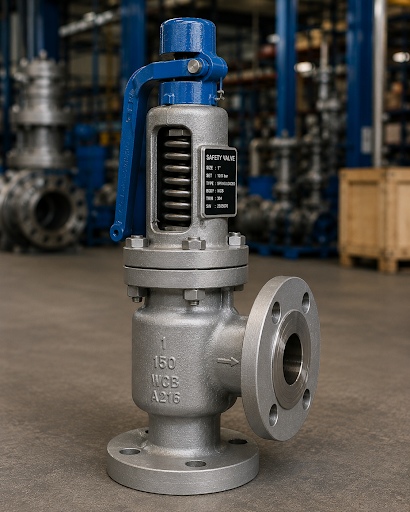
What Is a Safety Valve and How Does It Work?

Industrial systems are designed to operate within specific pressure limits, but unexpected events such as blocked pipelines, thermal expansion, pump failures, or excessive steam generation can cause pressure to rise rapidly. If left uncontrolled, this excess pressure can damage critical equipment, interrupt production, and create serious safety risks. This is where a Safety Valve plays a vital role. By automatically releasing excess pressure before it exceeds safe operating limits, a Safety Valve protects pressure vessels, steam boilers, compressors, and pipelines from costly failures. Choosing a well known Valve Manufacturer in Canada also ensures the valve is manufactured to international standards and delivers reliable overpressure protection in demanding industrial environments.
What Is a Safety Valve?
A Safety Valve is an automatic pressure relief device designed to protect pressurized systems from exceeding their Maximum Allowable Working Pressure (MAWP). Unlike manually operated valves, it functions without external power or operator intervention. Once the internal pressure reaches a predetermined set pressure, the valve opens automatically, discharges excess pressure, and closes once normal operating conditions are restored.
These valves are widely used in industries where pressure control is critical, including:
- Steam boilers
- Pressure vessels
- Oil and gas facilities
- Chemical processing plants
- Power generation
- Air compressors
- Heat exchangers
Without a properly selected Safety Valve, even a brief pressure surge can result in equipment damage, flange leakage, or unplanned plant shutdowns.
Why Are Safety Valves Important?
Pressure can increase much faster than conventional control systems can respond. During a blocked discharge, for example, a pump may continue forcing fluid into a closed system, causing internal pressure to rise rapidly. Similarly, excessive steam generation inside a steam boiler or thermal expansion of trapped liquid can generate pressures well beyond normal operating conditions.
Rather than relying on operators to react, a Safety Valves opens automatically once the calibrated set pressure is reached, preventing excessive stress on pressure vessels, piping systems, and connected equipment. This makes it one of the most important components in any industrial pressure relief system.
How Does a Safety Valve Work?
Although simple in appearance, a Safety Valve operates using carefully engineered pressure-balancing principles.
- Normal Operation
During normal operation, the system pressure remains below the valve’s set pressure. A calibrated spring holds the disc tightly against the seat, preventing leakage.
- Pressure Increase
As pressure rises inside the system, the upward force acting beneath the valve disc gradually increases. When this force exceeds the spring force, the valve reaches its opening point.
- Valve Opening
The valve lifts almost instantly using a rapid “pop action,” allowing steam, gas, or liquid to escape. This fast response is especially important in steam boiler applications, where pressure can rise within seconds.
The valve must also provide sufficient relieving capacity to ensure pressure does not exceed the allowable accumulation pressure defined by ASME Section I and ASME Section VIII.
- Valve Reseating
Once pressure falls below the blowdown pressure, the spring pushes the disc back onto its seat, restoring a leak-tight seal. Proper blowdown prevents repeated opening and closing, reducing wear and extending valve life.
Technical Specifications to Consider:
Selecting the right Safety Valve involves more than choosing the correct pipe size. Engineers evaluate several technical specifications to ensure safe and reliable performance.
| Specification | Typical Options |
| Valve Size | ½” to 12″ (DN15 to DN300) |
| Pressure Class | Class 150, 300, 600, 900, 1500, 2500 |
| End Connections | RF, RTJ, BW, SW, NPT |
| Body Materials | WCB Carbon Steel, CF8, CF8M, Duplex Stainless Steel |
| Trim Materials | SS304, SS316 |
| Applicable Standards | API 520, API 521, API 526, ASME Section I, ASME Section VIII, ISO 4126 |
The correct combination of pressure class, body material, end connection, and trim material ensures the valve performs reliably under varying temperatures, pressures, and process media.
Types of Safety Valves:
Different applications require different Safety Valve designs. The selection depends on operating pressure, back pressure, process media, and required relieving capacity.
| Valve Type | Best Application | Pressure Class | Common Materials |
| Spring Loaded Safety Valve | Steam boilers, pressure vessels | Class 150 to 2500 | WCB, CF8, CF8M |
| Conventional Safety Valve | General industrial service | Class 150 to 1500 | WCB, CF8 |
| Bellow Seal Safety Valve | Corrosive and hazardous media | Class 150 to 2500 | CF8M, Duplex Stainless Steel |
| Pilot Operated Safety Valve | High-pressure gas systems | Class 300 to 2500 | WCB, Duplex Stainless Steel |
A Spring Loaded Safety Valve uses a calibrated spring to control its opening pressure. It is widely used in steam boilers, pressure vessels, and compressed air systems because of its simple construction, fast response, and reliable performance.
- Conventional Safety Valve:
A Conventional Safety Valve is commonly used where discharge back pressure remains low and stable. Since the spring chamber is vented to the atmosphere, excessive back pressure can influence the valve’s opening and reseating characteristics. These valves are widely installed in oil and gas, chemical processing plants, and industrial utility systems where operating conditions remain relatively consistent.
- Bellow Seal Safety Valve:
A Bellow Seal Safety Valve is designed for hazardous, corrosive, or toxic process media. A metallic bellows isolates the spring chamber from the process fluid, preventing corrosion, reducing fugitive emissions, and improving long-term reliability. These valves are commonly used in petrochemical plants, chemical reactors, and applications involving aggressive chemicals where leakage cannot be tolerated.
- Pilot Operated Safety Valve:
Unlike spring-operated designs, a Pilot Operated Safety Valve uses system pressure controlled through a pilot mechanism to operate the main valve. This design provides excellent seat tightness, higher relieving capacity, and improved performance under varying operating pressures. It is widely used in LNG plants, refineries, natural gas processing facilities, and other high-pressure applications where product loss must be minimized.
Safety Valve vs Pressure Relief Valve:
Although the two terms are often used interchangeably, they perform differently and are designed for different process conditions.
| Feature | Safety Valve | Pressure Relief Valve |
| Service Media | Steam and compressible gases | Liquids |
| Opening Action | Rapid pop action | Gradual opening |
| Operation | Fully opens at set pressure | Opens proportionally as pressure increases |
| Typical Applications | Steam boilers, pressure vessels, compressors | Hydraulic systems, pumps, liquid pipelines |
Selecting the correct valve depends on the process media, operating pressure, and system design rather than simply matching the pipeline size.
How to Choose the Right Safety Valve:
Selecting a Safety Valve requires careful evaluation of operating conditions to ensure reliable overpressure protection.
- Operating Pressure
The valve’s set pressure should always remain below the equipment’s Maximum Allowable Working Pressure (MAWP) while complying with ASME Section I or ASME Section VIII requirements.
- Relieving Capacity
The valve must discharge sufficient flow during an emergency. An undersized valve may fail to relieve pressure quickly enough, while an oversized valve can cause unstable opening and closing, commonly known as valve chatter.
- Process Media
Different media require different materials and valve designs. Engineers typically select valves based on whether they handle steam, compressed air, natural gas, hydrocarbons, water, or corrosive chemicals.
Material Selection:
The valve body and trim materials should be compatible with both the operating temperature and process fluid.
- WCB Carbon Steel is widely used for steam and general industrial service because of its strength and durability.
- CF8 Stainless Steel is suitable for mildly corrosive fluids and water applications.
- CF8M Stainless Steel offers improved resistance to chlorides and aggressive chemicals.
- Duplex Stainless Steel provides superior corrosion resistance for offshore and marine environments.
Trim materials such as SS304 and SS316 are commonly selected for improved wear resistance and long service life.
End Connections:
The connection type should match the piping system and pressure rating.
Common options include:
- Raised Face (RF)
- Ring Type Joint (RTJ)
- Butt Weld (BW)
- Socket Weld (SW)
For high-pressure refinery applications, RTJ and BW connections are often preferred because they provide excellent sealing performance under severe operating conditions.
Common Mistakes When Selecting a Safety Valve:
Incorrect valve selection can compromise both equipment safety and process reliability.
Some of the most common mistakes include:
- Selecting the valve based only on pipeline size instead of relieving capacity
- Choosing an incorrect pressure class
- Ignoring back pressure
- Using incompatible body or trim materials for corrosive service
- Installing an incorrect set pressure
- Failing to perform periodic inspection, testing, and calibration
Proper valve sizing, installation, and maintenance significantly improve equipment reliability while reducing downtime and maintenance costs.
Industry Standards Every Safety Valve Should Meet:
Industrial Safety Valves should comply with internationally recognized standards to ensure consistent performance and regulatory compliance.
Important standards include:
- ASME Section I for power boilers
- ASME Section VIII for pressure vessels
- API 520 for sizing and selection
- API 521 for pressure relieving systems
- API 526 for flanged steel Safety Valves
- ISO 4126 for safety devices protecting against excessive pressure
Compliance with these standards ensures accurate set pressure, verified relieving capacity, and dependable operation throughout the valve’s service life.
Safety valves are one of the most important safety devices used in industrial pressure systems. Whether protecting a steam boiler, pressure vessel, compressor, or chemical process line, they automatically relieve excess pressure before equipment reaches unsafe operating conditions. Selecting the right safety valve requires careful consideration of operating pressure, relieving capacity, process media, temperature, material compatibility, and applicable industry standards. Working with a leading Valve Manufacturer in Canada ensures access to safety valves that are engineered for demanding industrial applications, manufactured to international standards, and designed to deliver reliable overpressure protection for years of safe operation.