Email us: sales@valvesonlycanada.com

Conventional Safety Valve
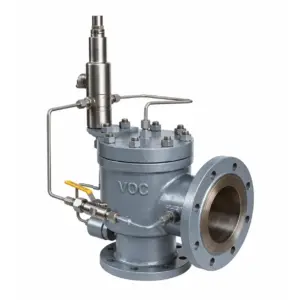
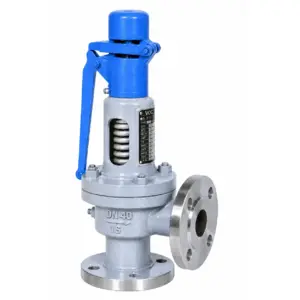
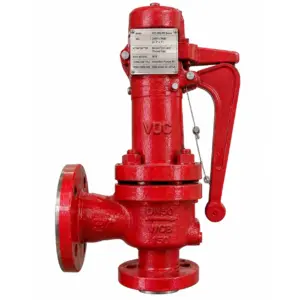
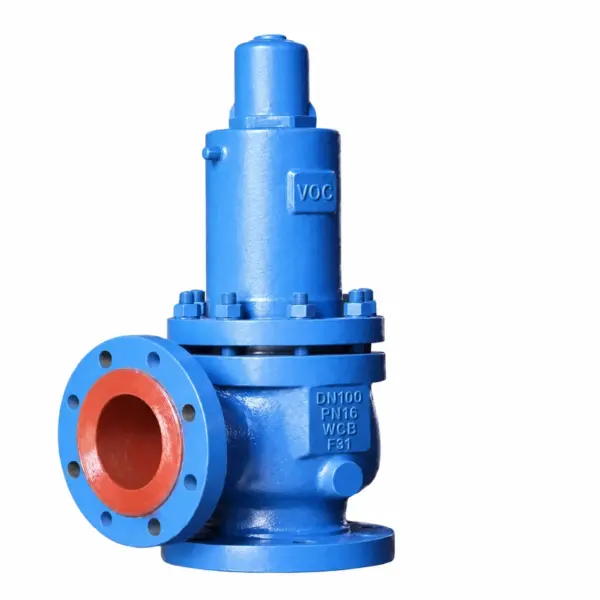
Conventional safety valves provide automatic overpressure protection by releasing excess pressure before equipment is damaged and resealing once normal operating pressure returns. As a leading Conventional Safety Valve Manufacturer in Canada, Valves Only Canada delivers reliable pressure relief valves to industries across Toronto, Calgary, Edmonton, Vancouver, Montreal, and throughout Canada.
Conventional Safety Valve Engineering Specifications:
- Nominal Size: ½” to 12″
- Pressure Class: Class 150 to Class 2500
- Temperature Range: -29°C to 538°C
- Design Standards: API 526, ASME Section VIII, ASME B16.34
- Seat Tightness Standard: API 527
- Inspection and Testing: Hydrostatic Test, Set Pressure Test, Seat Leakage Test, Functional Performance Test
Conventional Safety Valve Body Materials:
Available Body Material Grades:
- ASTM A216 WCB / WCC
- ASTM A351 CF8 / CF8M
- ASTM A890 F51
- ASTM A890 F53 / F55
- ASTM A351 CN7M
- ASTM B564 Hastelloy C276
Flow Control Components:
- Disc: Stainless Steel / Duplex Stainless Steel / Hastelloy
- Stem: ASTM A182 F304 / F316
- Spring: Alloy Steel / Stainless Steel
Sealing Arrangement:
- Seat: Metal Seated
- Gasket: Graphite / Spiral Wound
- Packing: Graphite
Conventional Safety Valve Working Principle:
The Conventional Safety Valve is a safety valve that utilizes a spring to release any excess pressure that builds up in a pressured machine. The compression spring ensures that the safety valve remains closed until the pressure in the system is equal to the preset pressure.
In case the pressure goes beyond the specified limit, the safety valve will open itself to allow excess pressure to be released. Once the pressure reduces to safe levels, the spring will force the disc back onto the seat.
Conventional Safety Valve Material Options:
Standard Materials:
| Component | Material | Grade | Typical Application |
| Body | Carbon Steel | ASTM A216 WCB / WCC | General industrial pressure systems |
| Body | Stainless Steel | ASTM A351 CF8 / CF8M | Corrosive process applications |
| Body | Duplex Stainless Steel | ASTM A890 F51 | Marine and offshore installations |
| Body | Super Duplex Stainless Steel | ASTM A890 F53 / F55 / 2507 | High chloride environments |
| Body | Alloy 20 | ASTM A351 CN7M | Acidic chemical service |
| Body | Hastelloy | ASTM B564 C276 | Severe corrosive process media |
Special Materials Available on Request:
- Monel 400 for marine and hydrofluoric acid service
- Inconel 625 / 718 for elevated temperature and pressure applications
- Titanium Grade 2 / Grade 5 for seawater environments
- Duplex Stainless Steel F60 for enhanced corrosion resistance
- Additional exotic alloys available according to project specifications and process requirements.
Conventional Safety Valve Product Features:
- Valve Type: Conventional Spring Loaded Safety Valve
- Operation: Automatic Spring Loaded
- Body Construction: Bolted Bonnet
- Pressure Setting: Factory preset according to customer operating requirements
- Suitable Media: Steam, gas, air, vapour, and non-corrosive industrial fluids
Key Advantages:
- Proper functioning of set pressure
- Quick reaction to pressure release
- Automatic reset once pressure returns to normal
- Reliable spring-loaded system
- Very little maintenance needed
- Extended service life
- Consistent seal even at varying operating conditions
Inspection Procedures:
- Hydrostatic Pressure Testing
- Set Pressure Calibration
- Seat Leakage Testing
- Functional Performance Testing
- Visual and Dimensional Inspection
Conventional Safety Valve Connection Types:
Our Conventional Safety Valves are available with multiple connection configurations to suit various industrial piping systems.
- Flanged as per ASME B16.5
- Threaded (NPT / BSP)
- Socket Weld
- Customized end connections based on project requirements
- Special flange drilling available upon request
Conventional Safety Valve Industry Applications:
- Oil and gas sector: Facilities for production, compressors, separators, and pressure-protection devices
- Power sector: Boilers, steam plant, turbines, and auxiliary utility systems
- Petrochemical sector: Reactors, pressure vessels, storage vessels, and process units
- Chemical process sector: Process equipment dealing with gases, vapors, and pressure fluid
- Water and wastewater treatment: Pumping stations, pressure vessels, and filtration systems
- Marine sector: Engine room machinery and auxiliary systems, and pressure vessels aboard ship
- Air compressor systems: Air receivers and compressed air distribution networks
- Heat exchanger systems: Pressure protection for thermal process equipment
- Pipeline infrastructure: Industrial transmission lines and pressurized process piping